
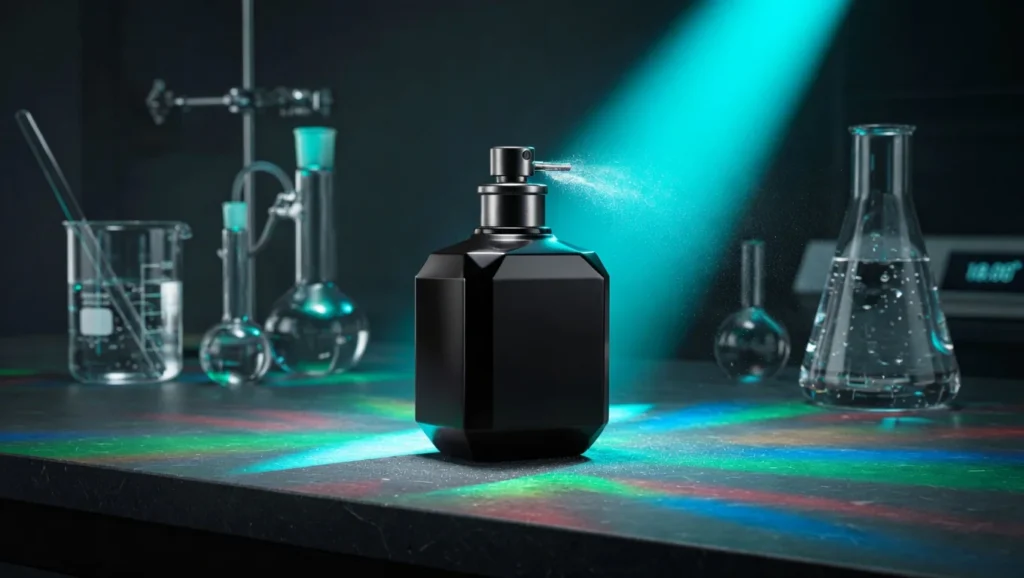
🧪 Labs Verdict: Does Your Lattafa Bottle Need to Macerate?
Yes. Due to massive global demand across the US and Canada, fast-fashion Middle Eastern houses bypass long-term factory aging. Fresh bottles arrive highly pressurized and unbonded, often presenting a harsh alcohol blast. Pressing the atomizer introduces ambient oxygen, initiating a mandatory 3-to-6-week chemical transformation that smooths transitions, expands sillage, and unlocks true beast-mode longevity.
It is a scenario played out daily across the North American fragrance community: You watch viral breakdown clips on our official ScentClones Twitter page, read enthusiastic forum threads on Reddit or BaseNotes, and finally order a trending Middle Eastern clone. The packaging looks pristine, the presentation punches well above its price tag, and your expectations for a high-performance alternative are sky-high. You unbox the bottle, press down on the atomizer, and take a deep breath.
Your nose is hit with a sharp wave of synthetic rubbing alcohol or a harsh bite resembling commercial window cleaner.
The thin, watery fluid completely vanishes from your skin within 60 minutes, leaving zero trace of an online-hyped sillage cloud.
The immediate reaction is a mix of panic and frustration. It is easy to assume you have been scammed by a shady grey-market discounter, that the specific batch is permanently defective, or that your bottle is a cheap counterfeit.
This initial performance floor is a natural, structural byproduct of how rapid-fire clone supply chains operate. It is incredibly common among the brand’s absolute best-sellers.
For instance, if you look at our exhaustive, real-world data points in the Lattafa Asad review, or read the breakdown of another viral powerhouse in the Lattafa Ana Abiyedh Rouge review, thousands of buyers across the US and Canada document this exact out-of-the-box chemical harshness before the liquid settles.
The same transformation happens beautifully with heavier fruity-oud profiles. In my recent testing for the Oud Maracuja Clones guide, several clones (especially Bade’e Al Oud Amethyst and Oud Mood Elixir) started off quite sharp and synthetic in the opening. After 2–3 weeks of proper maceration, the passionfruit notes became much juicier and the oud turned smoother and more luxurious — exactly like what thousands of buyers experience with Asad and Ana Abiyedh Rouge.
The same day-one harshness shows up outside Lattafa too. In the Rayhaan Nocturno Elixir vs Bleu de Chanel wear test, a fresh Elixir spray leaned sharp lemon-mint. After the stem was cleared and the bottle sat dark for a few weeks, the incense-sandalwood dry-down is what actually showed up. Judge the rested juice, not the first ten sprays.
To extract the exceptional performance and accurate scent profile you were promised online, you cannot treat this like a mainstream department store purchase. You must step into the role of the laboratory chemist and complete the final step of the manufacturing cycle on your own shelf.
Let’s pull back the curtain on the actual factory chemistry to understand why your fresh bottle arrives unbonded…
Need to track your oxidation progress?
Don’t guess when your Lattafa is ready. Use our automated Maceration & Aging Tracker to log your initial spray, dark storage dates, and performance evolution.
Technical Breakdown: Maceration vs. Maturation (The Core Science)
To understand why your perfume changes over time, we must establish structural authority by correcting a ubiquitous vocabulary error repeated across North American fragrance forums, subreddits, and video platforms. The community constantly uses the word maceration to describe aging a bottle at home. Chemically speaking, this is inaccurate.
This is a strictly large-scale, factory-side operation. Raw essential fragrance oils and natural concretes are steeped into an alcohol solvent inside massive, sealed, oxygen-deprived stainless steel vats. This phase occurs weeks before the liquid ever touches a glass bottle or an automated filling line.
This is the post-bottling aging process that occurs in your room. The very first time you compress the atomizer, you pump out the pressurized inert gas used during factory sealing and introduce a small bubble of ambient air into the juice chamber. This injection of oxygen shifts the chemical equilibrium, starting a passive aging cycle called oxidation.
Why do luxury designer and niche houses rarely suffer from this out-of-the-box harshness? Heritage brands maintain strict quality control timelines. A high-end fragrance is often left to mature in specialized dark tanks for months before being packaged and shipped to retail counters. By the time you buy it, the chemical transitions are already complete.
📦 The Global Supply Chain Reality
The fast-fashion clone industry operates on an entirely different economic matrix. To deliver the highly rated options highlighted in our list of the best Lattafa perfumes or high-demand entries from our curated Lattafa perfume dupe list for women at a retail cost under $35, manufacturers run an incredibly lean, real-time supply chain.
The juice is blended, bottled, packed into crates, and loaded into ocean cargo containers immediately. The formulation is forced to mature while sitting in transcontinental transit, in hot shipping hubs, or inside local distribution warehouses. Because the liquid remains sealed in a highly pressurized, oxygen-free state inside the dip tube, the final maturation phase cannot start until it hits your shelf and receives its first clearing sprays.
Why Mass Production Skips the Aging Room
When a brand manufactures millions of bottles a month to supply retailers across the US and Canada, physical storage room becomes an expensive bottleneck. Holding inventory for eight to twelve weeks to let it naturally age kills profit margins. By shifting the maturation phase from the industrial facility onto the consumer’s shelf, middle eastern manufacturers can bypass massive warehousing expenses and pass those savings directly onto the buyer.
This means your bottle arrives in an electrically charged, highly volatile suspension. The alcohol molecules have simply not had enough time to encapsulate and bond around the raw essential oil particles. When you understand this logistics framework, you realize that home oxidation is not an unverified internet myth—it is a mandatory step required to manually finish an abbreviated industrial manufacturing run.
Now that you understand the supply chain reality, let’s execute the exact step-by-step aging protocol…
The Step-by-Step Home Maturation Protocol
Maturing a fragrance at home requires adhering strictly to precise environmental variables. You cannot simply throw a bottle into a random corner and expect a premium olfactory evolution. If the storage conditions fluctuate, you risk triggering thermal degradation or rapid oxidation, which permanently destroys delicate top notes.
Follow this highly calibrated, chronological blueprint to safely guide your bottle from a harsh factory blend into a smooth, long-lasting composition.
Take your fresh bottle out of the packaging and pump the atomizer 10 to 15 times directly into an open room or a sink. This serves an important mechanical purpose: it clears out the stagnant, highly pressurized factory alcohol trapped inside the narrow plastic dip tube and introduces a fresh bubble of ambient oxygen into the main glass reservoir. Without this step, the liquid remains in an anaerobic environment, and the aging process cannot begin.
Store the bottle completely upright inside an enclosed, light-free space. Direct ultraviolet (UV) rays from sunlight act as an aggressive catalyst that breaks down the chemical bonds of raw essential oils, turning beautiful notes sour and accelerating rancidity. A dark bedroom drawer, a deep closet shelf, or keeping the bottle sealed inside its original cardboard presentation box provides an absolute protective shield against light exposure.
Maintain a stable storage environment kept strictly between a temperature range of 15°C to 22°C. Intense thermal fluctuations or exposure to high heat causes delicate citrus, floral, and top-note aromatic elements to expand, stress, and separate from the solvent solution.
- The Bathroom: High humidity and extreme temperature spikes from running showers will destroy the juice’s stability within days.
- Hot Cars or Windowsills: Concentrated radiant heat will flash off top notes and cause early chemical breakdown.
- The Refrigerator: Extreme cold forces rapid moisture condensation inside the metal cap assembly, which slowly seeps into the nozzle and compromises the compound.
Step 4: The Timeframes — Maturation Windows by Olfactory Profile
Not every fragrance profile ages at the exact same rate. Volatile, light molecules stabilize quickly, whereas dense, heavy base elements require a significantly extended window to achieve absolute chemical harmony. Use this technical timeline matrix to guide your collection:
| Scent Profile Category | Optimal Rest Window | Chemical Evolution & Real Examples |
|---|---|---|
| Freshies & Crisp Citruses | 2 to 3 Weeks | Burns off the ammonia-like window cleaner edge. Essential for sparkling configurations such as our detailed Lattafa Breeze review, helping clean molecules balance cleanly without a synthetic alcohol bite. |
| Heavy Spices & Dark Woods | 4 to 6 Weeks | Calms aggressive chemical transitions and integrates dense accords. Mandatory for heavy, peppery profiles to develop a smooth, rounded cloud instead of a chaotic olfactory blast. |
| Dense Gourmands & Deep Ouds | 6 Weeks Minimum | Heavy essential oils and natural sugars darken as they oxygenate. Crucial for rich compositions like our comprehensive Lattafa Khamrah Dukhan review, transforming thin syrupy notes into a deep, long-lasting sillage bubble. |
Once you have placed your bottle into its dark climate-controlled home, leave it completely alone. Avoid the temptation to pull it out daily or mess with it. Let structural chemistry work silently in the background.
Let’s explore the exact molecular reactions occurring inside the glass chamber during this resting window…
Scent Chemistry: What Is Actually Changing Inside the Bottle?
To understand why a period of shelf rest fundamentally transforms a clone house perfume, you have to look past marketing hype and dive directly into molecular fluid dynamics. The evolutionary shift that occurs inside your glass reservoir is not an unverified internet myth; it is a predictable sequence of organic chemistry that changes how fragrance compounds interact with ambient air and human skin.
When a brand-new bottle is rushed off an automated production line, the chemical suspension is highly volatile. Raw, highly concentrated essential oils, synthetic aroma chemicals, and Denatured Alcohol (SD Alcohol 40-B) are mixed together under high pressure. Because the solution is bottled almost instantly, these diverse molecules remain unbonded. They float through the liquid in fragmented clusters, surrounded by aggressive, sharp alcohol particles.
When you spray a completely fresh bottle, these free-floating alcohol clusters flash off your skin instantly. This rapid evaporation overwhelms your olfactory receptors, causing that familiar, harsh chemical burn that completely blocks out the subtle nuances of the underlying scent.
🔬 The Chemistry of Esterification & Oxidation
The moment you introduce ambient oxygen into the glass chamber via your initial clearing sprays, you initiate a natural organic reaction known as esterification. Over a window of several weeks, oxygen molecules function as a stabilizing agent, forcing the unbonded alcohol solvent to encapsulate and bond seamlessly around the aromatic essential oil particles.
As these covalent bonds tighten, the evaporation rate of the entire perfume compound slows down drastically. Instead of a chaotic, uneven release, the formula transitions into a smooth, structured, and predictable evaporation timeline.
This structural stabilization yields a profound transformation across two distinct sections of your fragrance’s traditional olfactory pyramid:
Delicate, short-chain aromatic molecules like mandarin, lime, white peach, and the highly volatile bergamot in perfume compositions lose their aggressive, ammonia-like synthetic bite. Rest allows these bright elements to express themselves with realistic clarity, completely removing the initial “window cleaner” edge. This is highly evident when tracking fresh batches of clean citrus profiles, such as the airy blend analyzed in our deep Lattafa Vintage Radio review.
Heavy, complex, long-chain compounds such as Ambroxan, thick crystalline white musks, rich vanilla, and the dense accords detailed in our comprehensive guide to oud in perfume gradually unfold within the solution. In an un-macerated bottle, these massive molecules sit clumped tightly together, dragging down performance. Home oxidation allows these dense fixatives to distribute evenly throughout the solution, building a rich, persistent sillage bubble that projects cleanly off your skin.
This molecular balancing act explains why ultra-dense, dark, or heavily atmospheric configurations—like the smoky wood profile found in Lattafa Maahir Black Edition—demand the longest aging windows. Their high molecular weight forces them to resist rapid esterification, requiring a patient 4-to-6-week shelf rest before the harsh chemical edges finally back down to reveal a smooth, well-blended base.
Stuck with a brand-new bottle that you want to wear immediately? Let’s implement a clever material workaround…
Fabric Fixation Tricks & Hot-Weather Management
If you do not want to wait a full month for your new bottle to complete its maturation cycle on the shelf, you can utilize the disruptive technique of the fabric fixation method. This simple physical workaround allows you to bypass traditional skin-level evaporation barriers and draw immediate, balanced performance from a completely fresh fragrance compound.
When you apply a newly unboxed, unbonded clone directly to bare skin, your warm body lipids and pulse points act as an aggressive thermal catalyst. The unblended, free-floating denatured alcohol solvent flashes off your skin rapidly. As it evaporates, it carries the fragile top notes along with it, crushing your overall longevity down to under an hour and leaving a distorted scent trail.
By shifting your application away from warm bare skin and spraying directly onto stable textile fibers like linen, heavy cotton, denim, or wool, you completely rewrite the fluid dynamics of the formulation.
Woven textile fibers function as microscopic porous traps. Because clothing lacks the metabolic heat of human blood flow, volatile oil molecules are physically anchored inside the cross-hatched weave instead of flashing off.
The solution is forced to transition through a slow, measured evaporation loop. This dampens the aggressive, synthetic opening notes and coaxes out an immediate, smooth dry-down that mimics a fully matured batch.
This application workaround becomes absolutely vital when managing clone performance during high-heat scenarios across the United States and Canada. High environmental temperatures and humidity can cause un-macerated perfumes to turn incredibly cloying, sticky, or to completely disintegrate within minutes of stepping outdoors.
When you are deploying fresh, high-heat summer profiles from our curated selection of long-lasting Arabian summer perfumes, anchoring the spray to your shirt collar, undershirt cuffs, or sleeves stabilizes the compound. The fabric barrier keeps the volatile fresh notes structured and cool, ensuring your sillage profile remains elegant and clean without choking out the room.
The Fresh-Bottle Fabric Application Guide
- ✔ Maintain Distance: Always hold the atomizer at least 8 to 10 inches away from the garment to ensure an even micro-mist and prevent concentrated oil spot staining.
- ✔ Target Interiors: For delicate or light-colored fabrics, spray the interior lining or inner seams of the clothing to eliminate any risk of visible oil tracks.
- ✔ Layer Wisely: Apply 2 sprays to the fabric of your shirt to anchor the fresh top notes, and 1 light spray to your hair or wrists to allow the heavier base accords to radiate.
Let’s address the most common technical questions cleanly and directly in our definitive FAQ matrix…
Performance FAQ – Maturation Variables
This high-density technical FAQ addresses the most critical queries tracked across search engines and fragrance databases regarding Middle Eastern clone shelf development. These direct, data-driven answers completely skip traditional conversational preamble to offer pure information gain.